American football has grown significantly over its decades-long history. From rough-and-tumble beginnings on college turf, the sport has morphed into a global phenomenon.
Here’s exploring critical events that have marked the history of American football, from critical changes in rules to record viewership, tech advances, and more.
Early Beginnings
Historians trace the origins of American football to soccer and rugby. Both parent games had become popular in the mid-19th Century, paving the way for the birth of American football across college campuses.
Records show that the first football game saw Rutgers and Princeton face off in 1869. Then, the sport looked more like soccer than modern football, as players could move the ball with their feet or hands.
Initially, each college adopted its unique set of rules. But that would soon cause confusion and disagreements during intercollegiate matches. By the late 1800s, some colleges started creating distinct versions of the game that allowed players to run plays and carry balls, much like it’s done today.
Walter Camp and Key Innovations
Walter Camp, often regarded as the “Father of American Football,” helped create rules that separated the game from rugby. His innovations include:
- Standardized rules
- Line of scrimmage
- Downs
- Set player limits (11 on either side)
By 1880, Camp’s rules became widely received, as football gradually emerged as a distinct sport.
How College Football Grew
Football began to thrive after Walter Camp’s rules became established. However, its physical nature caused many brutal injuries, birthing growing concerns across the nation, including an intervention from President Theodore Roosevelt to address safety concerns.
A year after President Theodore Roosevelt’s call, universities formed the National Collegiate Athletic Association (NCAA) in 1906 to administer rule changes, competitions, and improve athletes’ safety.
With increasing safety protocols came more popularity. And soon, football became a regular feature across American universities.
Pro Football
With a large following across US colleges, American football was set to launch its professional arm. In 1920, the National Football League (NFL) began with 14 teams, setting the stage for one of the world’s most popular sports leagues.
Initially, the NFL faced early competition from the All-America Football Conference (AAFC) and other leagues. However, by the 1950s, it became firmly established as the nation’s leading professional football league.
Advances in Technology and Tactics
As football kept developing, innovations in tactics, equipment, and media exposure between the 1930s and 40s made the game even more famous and accepted. The 1940s saw leather helmets replaced by plastic helmets, while face masks helped to boost player safety and confidence. NFL games first reached TV screens in 1939, and soon became a favorite for millions of American viewers.
Media visibility also forced teams to begin prioritizing passing plays. As a result, more dynamic formations and tactics that made the game swifter and more exciting for spectators emerged. The changes set the foundation for the game’s commercial success, as it emerged as the perfect fit for TV audiences.
How the Super Bowl Began
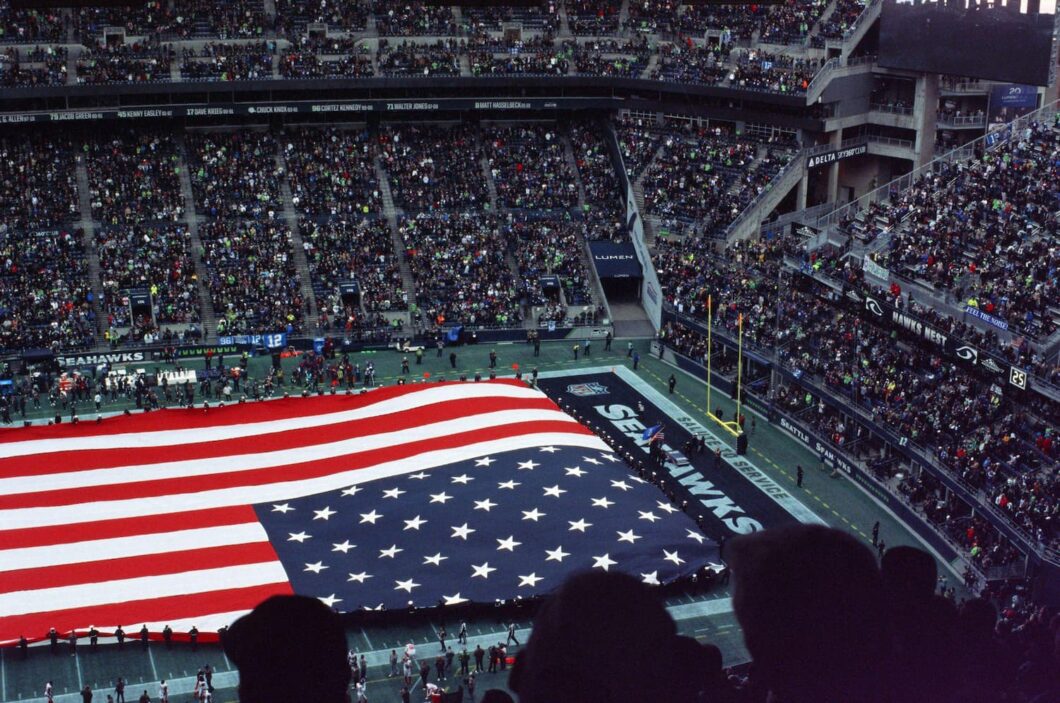
The first Super Bowl was held in 1967 between the NFL-champion Green Bay Packers and the AFL champion Kansas City Chiefs. By 1970, the AFL joined as two conferences within the NFL. That merger would make the Super Bowl the ultimate championship game for American football.
The event quickly rose in prominence to become one of the most-watched events in the US. Today, it draws millions of viewers globally, thanks to outstanding advertising campaigns and engaging halftime shows.
Reaching Nations, Influencing Culture
Football has rapidly drawn admiration from viewers across the globe. In 2007, the NFL hosted games in London and Mexico City, attracting thousands of spectators and growing international interest in the game.
Thanks to media technology via social media and live streaming platforms, viewers have easier access to American football events. American football athletes are now worldwide celebrities, as the sport significantly impacts global fashion, music, and media.
Conclusion
Participation in women’s football is increasing, while data analytics is redefining how teams train and strategize. Considering the swift growth of American football over the last few decades, one can only expect increasing evolution and growing influence for the game in the coming years.